
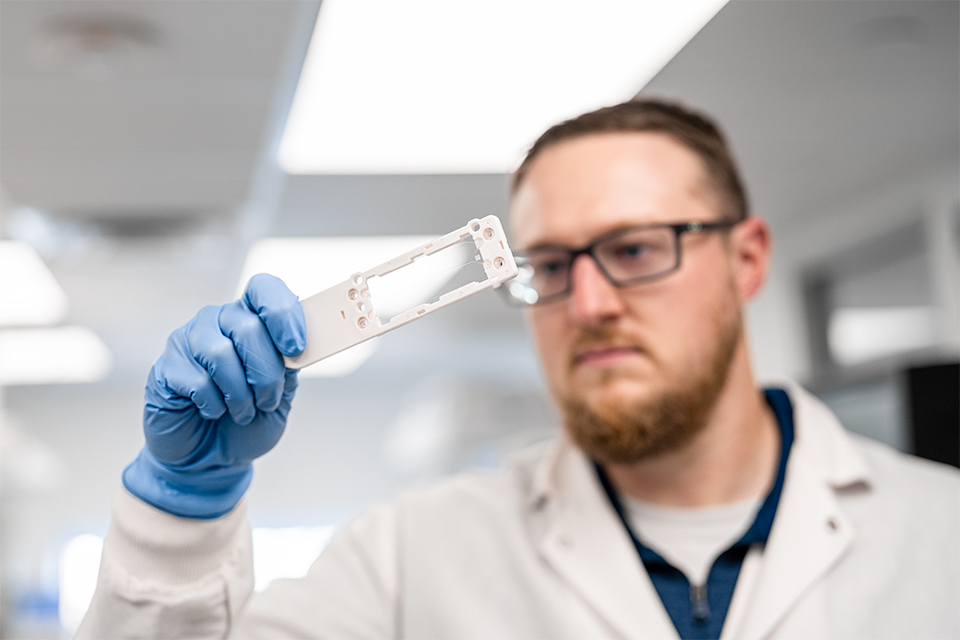
In vaccine and antiviral development, confidence in viral identity and genome integrity is essential. Whether confirming strain authenticity, validating genetic modifications, or identifying spontaneous mutations, genomics analyses ensure that research materials align with experimental goals and regulatory expectations. At Microbiologics, we integrate sequencing into our viral stock workflows to help researchers streamline studies, minimize risk, and advance confidently toward regulatory milestones.
Determine Goals of Genomic Analysis
It is important to determine the goals of your genetic analysis and the type of data that will best support your study. Microbiologics offers both targeted analysis and whole genome sequencing, each providing unique benefits depending on the required depth of analysis, budget, and regulatory requirements.
-
- Afsaneh Kharazmi leads viral stock production at the Global Virology Center with a focus on quality and process optimization.
-
- Nina Byloff drives viral manufacturing at the Global Virology Center with an emphasis on reliability and scalability.
Targeted Analysis
Targeted sequencing is especially valuable when researchers have interest in a singular genomic target. They may need to verify specific genome regions with the highest possible accuracy, such as envelope or surface proteins, without sequencing the entire genome. Analyses may use Sanger sequencing or targeted Next Generation Sequencing (NGS) and can be customized to support novel study designs or unconventional sample types.
KEY BENEFITS
High accuracy: Exceptionally low error rates make targeted analysis ideal for confirming known sequences or validating mutations detected through rapid methods such as qPCR.
Detailed analysis information for a specific gene of interest (typically 700-900 base pairs), which is useful when full-genome analysis isn’t required.
Confidence in results: Frequently used to analyze critical regions related to drug resistance or vaccine target sites.
RECOMMENDED APPLICATIONS
Use targeted analysis to:
- Validate a specific mutation
- Sequence one or a few genes
- Confirm clones or engineered viral constructs
- Generate standardized data for regulatory or reference use
- Achieve faster, more cost-effective results than full-genome sequencing approaches
- Analyze smaller sample sets or target regions
Whole Genome Sequencing
High-resolution, comprehensive genome sequencing produces complete genome assemblies, enabling analyses of genomic variants such as single nucleotide polymorphisms (SNPs), insertions and deletions (indels), and structural variants. Common applications include identification, comparative genomics, and mutation analysis. Workflows can accommodate both single isolates as well as complex samples, supporting discovery research, quality assurance, and regulatory submissions. A common use case for whole genome sequencing in drug development is to support mechanism-of-action studies by confirming the presence of intended genetic targets.
At Microbiologics’ Global Genomics Center, NGS is used to define genomic composition of the biological materials we produce. A comprehensive, non-targeted approach sequences viral nucleic acids alongside the background material for a more complete genetic profile.
KEY BENEFITS
Full-genome coverage: Captures the entire viral genome, including coding and non-coding regions, using automated sequencing and bioinformatics tools.
Complete characterization: Enables identification of known and novel mutations across the genome for quality control and reference development.
Minor variant detection: Detects low-frequency variants or quasispecies that may be missed by qPCR or Sanger sequencing.
Genetic drift monitoring: Tracks viral evolution to ensure the virus remains representative of the wild-type strain or specific research lineage.
Phylogenetic insight: Supports epidemiological and lineage analysis to compare viral stocks to circulating strains.
Traceability: Allows researchers to track viral stock origin, evolution, and relation to other global isolates.
RECOMMENDED APPLICATIONS
Use WGS to:
- Confirm viral identity and full-genome integrity
- Characterize reference materials for vaccine or antiviral development
- Support regulatory documentation for viral safety and quality assurance
Strengthening Confidence Through Sequencing and Genome Analysis
Sequencing data helps assess viral stability, guide assay development, and support regulatory submissions. Both targeted analysis and whole genome sequencing analysis provide a strong suite of tools to support simple or complex projects throughout the clinical research continuum.
Looking for sequencing support for your viral program?
Let’s discuss your goals and how our services can align with your workflow. Learn more and connect with our team at our website.
About the Authors
Afsaneh Kharazmi
 Afsaneh Kharazmi is the Manufacturing project Lead at Microbiologics’ Global Virology Center, bringing over 12 years of experience in the biotechnology industry with a strong background in quality control and virology. In her current role, she leads the end-to-end production of diverse viral strains using advanced tissue culture techniques, ensuring consistency, scalability, and compliance with quality standards. In her current role, she is managing production timelines, overseeing quality testing workflows, and driving process optimization initiatives to enhance operational efficiency and product reliability. Steady commitment to reliability, collaboration, and scientific rigor are some of the qualities that make her an important part of the talented team at Microbiologics. Afsaneh loves hiking early mornings whenever she had time, seeing the beautiful wild nature, and learning different facts about the vast botany present in the wild.
Nina Byloff
 I’m a Manufacturing Project Lead at the Global Virology Center in San Diego, CA, where I oversee projects from initiation to completion. My role involves close collaboration with the Business Development team to present our capabilities, pursue new opportunities, and secure contracts. I manage project planning – with a strong focus on influenza virus opportunities—including quote generation, scheduling, and task delegation—while also participating hands-on in lab execution and producing customized certificates of analysis. Beyond project work, I’m passionate about fostering a positive work environment and proudly serve as co-chair of the Culture Club at Microbiologics. Fun fact: I founded the “Shih Tzus of San Diego” Facebook group, which has grown into a vibrant community of hundreds of Shih Tzu lovers! We host monthly meetups and are excited to launch our first annual West Coast Shih Tzu Festival in July





0 Comments